Tattoo Removal with the PicoSure Laser
- Price per session from CHF 50 (small black tattoos), 5 × 5 cm CHF 200
- Usually 3–10 sessions, at least 6 weeks apart
- Clinic in Kreuzlingen – a 10-minute walk from Konstanz station, payment in euros possible
- Free assessment: just send a photo by WhatsApp
Free, no-obligation assessment · Reply usually within 24 hours · Calling from Germany: 0177 55 20 180
A tattoo used to be a decision for life. Today it can be reliably removed with a laser, or lightened for a cover-up. On this page you will find everything you should know before tattoo removal: what it costs, how many sessions you need, how a treatment works, whether it hurts and how you can support the healing. Treatments take place at my clinic in Kreuzlingen with the PicoSure laser.
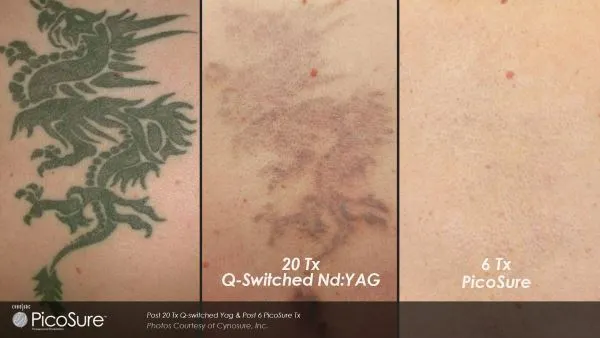
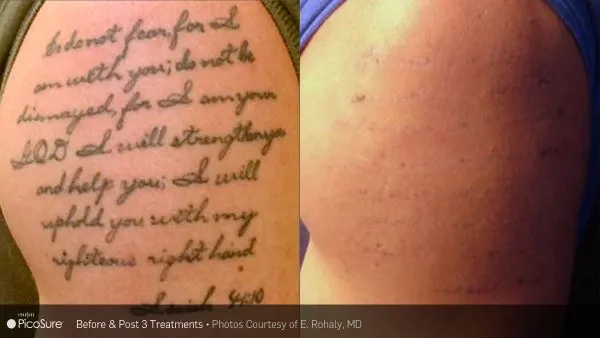
See more before-and-after photos
How much does tattoo removal cost?
You pay per session. The price depends on the size of the tattoo:
| Small black tattoo | from CHF 50 |
| 5 × 5 cm | CHF 200 |
| 10 × 10 cm | CHF 350 |
| 15 × 15 cm | CHF 550 |
Colour tattoos cost a little more than black ones. You can work out the binding price for your first session in seconds with the tattoo removal price calculator. Or just send me a photo with the size. All prices, including microblading and permanent make-up, are in the price list.
Coming from Germany? You can pay in euros. You pay the same amount, with no conversion (CHF 200 = 200 €). The clinic is a 10-minute walk from Konstanz station. Information for clients from Konstanz
How many sessions will you need?
It usually takes 3–10 sessions before a tattoo is no longer visible. Sessions are at least 6 weeks apart. So it usually takes 6 months to 2 years for the tattoo to disappear completely.
How many sessions you need depends on the size, colours, depth and age of your tattoo, your skin type and where it is on your body. Scarring, very deep or double-inked tattoos and cover-ups can need more than 10 sessions. Before your first session, I'll tell you honestly what to expect.
Why a break of at least 6 weeks?
The laser breaks the colour pigments down into tiny particles. Your body then has to clear them away through the lymphatic system, and that takes time. Shorter gaps don't make the removal faster, just more expensive. The more time you give your skin, the better it clears the ink. Sometimes this even means fewer sessions.
How tattoo removal works
- Send a photo: Send me a photo of your tattoo with its size via WhatsApp. You'll get a free estimate of the price and the number of sessions.
- Consultation and first session: I only start once you know exactly what to expect. Depending on the size, the laser treatment itself only takes a few minutes.
- Healing: Redness and swelling are normal and go down after a few days. You can usually carry on with your everyday life as normal.
- Further sessions: At least 6 weeks apart, until you get the result you want.
Why the PicoSure laser is better than older lasers
Older «Q-switched» lasers work in nanoseconds and heat the ink a lot. The PicoSure is a picosecond laser and works around a hundred times faster. Imagine the ink as boulders. Conventional lasers blast them into pebbles. The PicoSure uses a photomechanical pressure wave to shatter them into fine sand. Your body can clear this «sand» away much more easily. That means fewer sessions and faster results. Even tattoos that have been treated before and stopped fading with other lasers can often still be removed successfully. More about the PicoSure laser
Which colours can be removed?
Black and dark colours absorb laser light best and are the easiest to remove. Greens and blues used to be a problem. With the PicoSure's 755 nm wavelength, they can be treated well. Yellow, orange and red are harder and often need more sessions.
Does tattoo removal hurt?
Everyone feels it differently. It's often compared to a rubber band snapping against your skin. Depending on the body area, it can feel stronger or milder. The PicoSure produces less heat in the tissue than older devices. So the treatment is usually less painful, and your skin heals faster. If you like, I can advise you on numbing cream.
After your session: aftercare and side effects
Redness, swelling, sometimes small blisters and a slight burning feeling are normal for the first few days. For a few days, avoid intense exercise, saunas, swimming and direct sun. Drinking plenty of water helps your body clear the pigments. Everything about aftercare
Fading a tattoo for a cover-up
Want a new design tattooed over the old one? Often just a few sessions are enough to fade the old tattoo so your tattoo artist has a free hand. More about cover-up preparation
Safe and legally compliant: V-NISSG certificate of competence
Since 1 June 2024, only people with a Swiss federal certificate of competence may remove tattoos by laser in Switzerland. Andreas Baumgärtner holds this certificate. In Germany, laser tattoo removal has been restricted to doctors since 31.12.2020 (§ 5 Abs. 2 NiSV). That's one reason why many clients from the Konstanz area come to Kreuzlingen.
Who treats you?
I treat you personally: Andreas Baumgärtner. I've been working with lasers since 2012, and exclusively with the PicoSure laser since 2016. The clinic is a BAG-certified business with a V-NISSG certificate of competence. More about me
Clinic in Kreuzlingen – easy to reach from Konstanz, Thurgau, St. Gallen and Zurich
- Hauptstr. 14a, 8280 Kreuzlingen – in the rear building of Villa Bellevue, entrance at the side.
- A 3-minute walk from Kreuzlingen station, 10 minutes on foot from Konstanz station, 5 minutes on foot from the LAGO shopping centre.
- Parking right in front of the clinic.
- From Germany: bring your ID card or passport for the border crossing. Payment in euros possible. More for Konstanz
- From Zurich: Getting here and information for Zurich
Guide: common questions explained in detail
- When will you see results after tattoo removal?
- How long does tattoo removal really take?
- The right gap between laser sessions
- Why the body area affects how long it takes
- Red ink: why it needs more sessions
- Tattoo darker after the first session? (Ghosting)
- Itching after laser treatment
- Why you shouldn't swim after laser treatment
- Tips for faster healing
- Cover-up or laser? Help with your decision
All guide articles · The most important questions and answers
Frequently asked questions about tattoo removal
How much does tattoo removal cost?
The price is per session and depends on the size: small black tattoos from CHF 50, 5 × 5 cm CHF 200, 10 × 10 cm CHF 350, 15 × 15 cm CHF 550. Colour tattoos cost a little more. You can work out the exact price with the price calculator, or send me a photo via WhatsApp.
Can I pay in euros?
Yes. You pay the same amount in euros, with no conversion: CHF 200 equals 200 €.
How many sessions are needed?
Usually 3–10 sessions, at least 6 weeks apart. Scarring, very deep or double-inked tattoos and cover-ups can need more than 10.
How long does it take for the tattoo to disappear?
Usually 6 months to 2 years, depending on the number of sessions and the gaps between them.
Does tattoo removal hurt?
Many people compare it to a rubber band snapping against the skin. How strong it feels depends on the body area and how sensitive you are. If you like, a numbing cream can be used.
Will there be scars?
The PicoSure laser produces less heat than older lasers and greatly reduces the risk of scarring. Proper aftercare and enough time between sessions are important.
Can all colours be removed?
Black and dark colours come out best. Green and blue can be treated well with the PicoSure's 755 nm wavelength. Yellow and orange are harder and often need more sessions.
Can someone who isn't a doctor remove tattoos by laser in Switzerland?
Yes, with a Swiss federal certificate of competence under V-NISSG (required since 1 June 2024). Andreas Baumgärtner holds this certificate. In Germany, only doctors have been allowed to remove tattoos by laser since 31.12.2020.
Ask for a free assessment now
Send me a photo of your tattoo and tell me its size. I’ll get back to you with a price, the likely number of sessions and a suggested appointment.